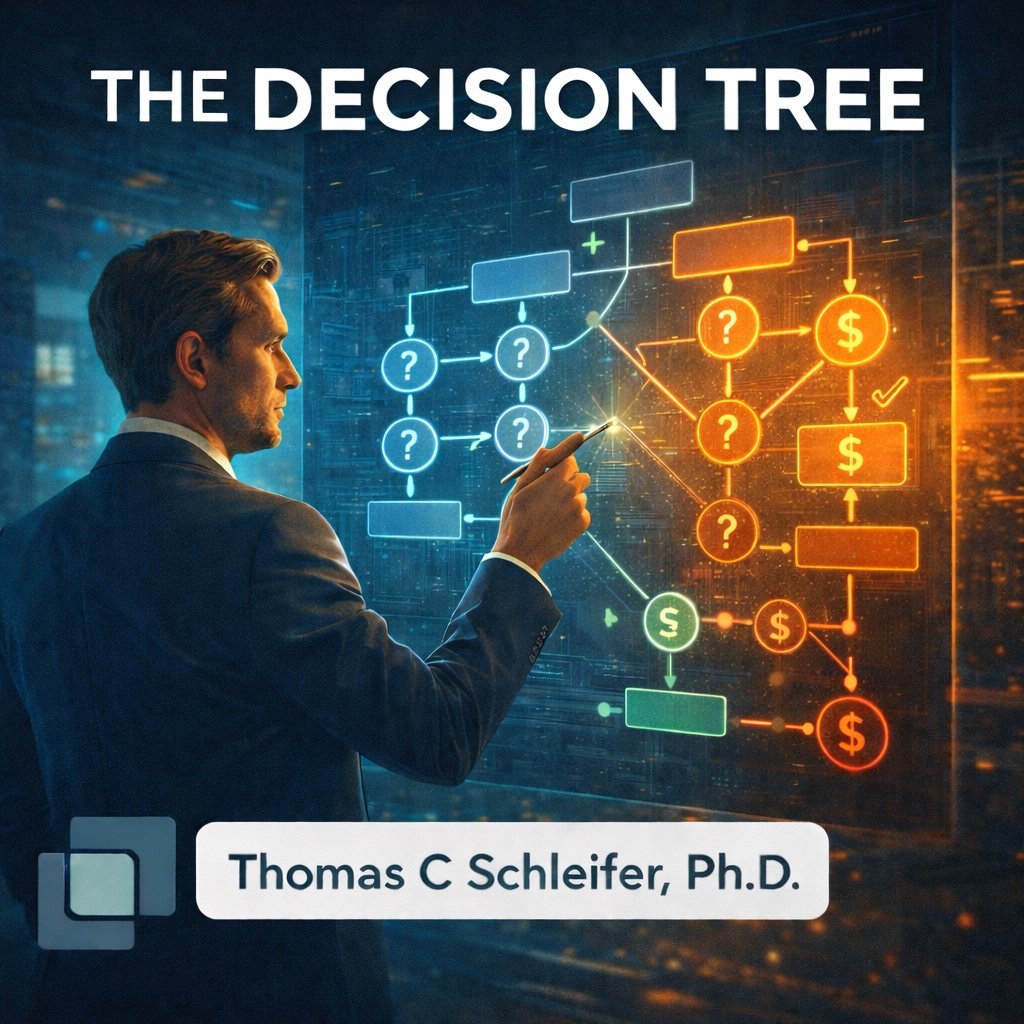
The human mind is a problem-solving machine. It takes in data through the 5 senses then stores and classifies the data as either good or bad for survival of the entity. The brain then amplifies the “good” classification with neurotransmitters like serotonin and peptides like endorphin or warns the entity of “danger” with the neurotransmitter glutamate (adrenaline) that stimulates the fear response. What’s more, the human brain is so efficient that it can abstract the negative impact from past experiences to predict future dangers.
Decision Making
That’s how decisions are made. Every human brain does it the same way. At the neural level, no one is smarter. The only difference is how each child experiences life from the beginning and how extensive their experience is as life goes on. In other words, how one takes in data and how one recalls and stores the experience effects how one makes decisions. The neural process is identical. Only the content (data) differs.
Everyone is a Manager
Everyone makes decisions (choices) as soon as they recognize pleasure or pain as a babe in arms. Everyone manages their life every day. That’s why we all think we’re managers and can manage a business or a ball team the same way we manage our lives. We even have an expression for it. We call it “common sense”. Few contractors I have worked with over the years had any formal business management training, but they were sure they knew how to manage a contracting firm. They were already running a contracting firm, so what’s all this about learning professional business management skills?
Not Everyone is a Successful Manager
Last week we said that “all ongoing business management is about making choices. The birth and building of your business are the net result of a series of choices you made. Some were good choices. Some not so good. “Only the content differs”; that is the rub.
• Deciding to go to the grocery store when the fridge is empty is a far cry from figuring out where to invest your company’s profits to get the best return.
• Choosing which job to bid must weigh the comparative size, complexity, location, duration, financial demands, owner’s reputation, and the company’s experience against the alternative jobs to choose which one is likely to produce the most robust profit.
• Only the complexity differs. The inputs required for the grocery shopping decision are simple and obvious. The inputs required for the bid decision are complex and variable. They must be researched, measured, and carefully weighed one against the other to arrive at the most profitable choice.
• Complex business decisions cannot be left to common sense. They must be informed decisions that weigh multiple variables carefully to assess risk and predict outcomes.
• This management decision making process has been reduced to a model flowchart (decision tree) that isolates variables, weighs attendant risks, measures outcomes, and selects (since this is a business exercise) the most profitable course.
Project Managers
All decision functions are straightforward “go/no-go” scenarios. However, as the variables that might affect the outcome become more complex it is helpful to utilize a visual method of predictive analysis. Many managers are familiar with “decision trees” and utilize this decision-making method to manage complex projects. There is no reason why such a method should be overlooked when managing a construction business.
The Decision Tree
Decision tree analysis is a visual, flowchart-like method for mapping out complex decisions, showing potential choices, uncertain outcomes (chance nodes), and results (leaf nodes) to help select the best path. Decision tree analysis is commonly used in business, finance, and machine learning to evaluate risks, costs, and probabilities for better strategic planning. It breaks down problems into manageable steps, helping to compare alternatives side-by-side, identify potential risks and benefits, and arrive at more informed, data-driven choices.
Managing the Enterprise
Most construction companies start out as simple one person operations that can be run by the seat of any rational person’s pants. A unique feature of the construction industry, however, is that mom and pop businesses grow very quickly into large complex enterprises that require professional business management skills to remain successful. The decision to bid or not to bid on a certain project, or self-perform on a complex job, or partner with an unfamiliar subcontractor, or purchase expensive heavy equipment can all be quite daunting and require careful consideration.
Next week we will take a look at some simple examples of how to use decision tree analysis to manage the entire construction enterprise.
See you then.
For more information on construction business decision making, read more at: DECISIONS
For a broader view of financial management, read more at: MANAGEMENT
To receive the free weekly Construction Messages, ask questions, or make comments contact me at research@simplarfoundation.org.
Please circulate this widely. It will benefit your constituents. This research is continuous and includes new information weekly as it becomes available. Thank you.